Supply Chain Management
- Share
Uniouter Supply Chain Types:

Fabric Suppliers
Providing various types of cloth and textiles

Accessories Suppliers
Providing buttons, zippers, ribbons, and other garment accessories

Labels, Hangtags, Packaging Suppliers
Providing customized labels, hangtags, and packaging to enhance brand image and product information display

Printing & Embroidery Suppliers
Providing various garment printing and embroidery techniques and services
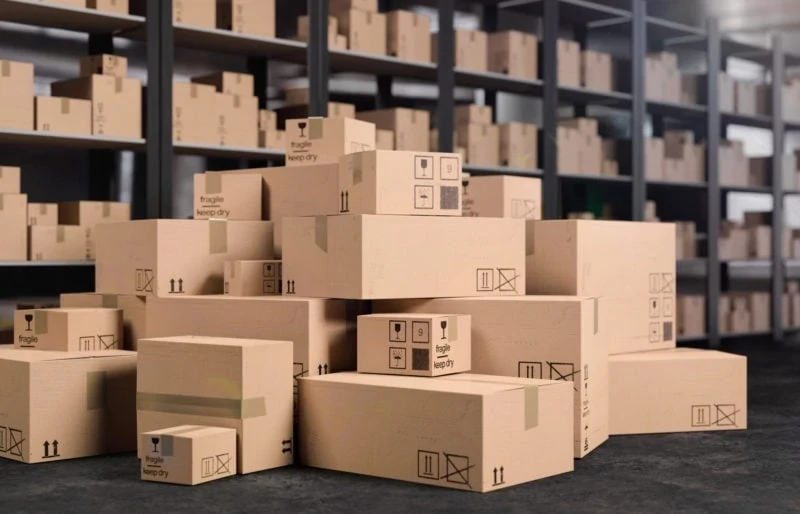
Logistics Partners
Providing freight, transportation, and logistics distribution services
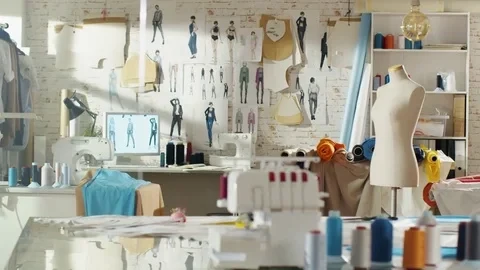
Design, Photography, and Modeling Agencies
Collaborating with design, photography, and modeling agencies for product design, photography, and fashion shows intended for official websites and marketing activities

Marketing Agencies
Collaborating with marketing agencies for brand strategy planning, market research, and brand promotion activities to increase the factory's brand awareness and market share.
Uniouter Supply Chain Management
Continuous improvement and innovation are conducive to meeting the ever-changing needs of the market

Supplier Evaluation and Selection
Evaluate potential suppliers based on product quality, supply capacity, production capability, delivery punctuality, and price reasonableness. Select suppliers that meet the factory's requirements.

Contract Management
Enter into formal contracts with suppliers, clearly defining responsibilities of both parties, delivery deadlines, quality standards, payment terms, etc. Ensure transparency and legality in supplier relationships.

Quality Control
Work with suppliers to establish clear quality standards and requirements, ensuring the supplied materials and products meet the factory's quality standards. Conduct regular quality inspections and sampling tests.

Supply Chain Collaboration
Establish close cooperative relationships with suppliers, strengthen communication and coordination, ensure timely and accurate supply of materials, and avoid production delays and inventory shortages.

Supplier Performance Evaluation
Regularly evaluate supplier performance, including delivery punctuality, product quality, customer service, etc. Provide feedback to suppliers and improve cooperation.

Risk Management
Identify and manage potential risks within the supply chain, such as supplier reliability, natural disasters, political factors, etc. Establish alternative suppliers and risk response plans.

Supplier Development
Establish long-term, stable partnerships with suppliers to promote mutual development and enhance competitiveness. Drive suppliers to improve their technical capabilities and innovation abilities to meet the ever-changing market demands.

If you have any questions
Importance of the Supply Chain in the Service Industry
Here's how optimizing the supply Chain benefits the Apparel Industry:

Operational Flexibility
Efficient supply chain management optimizes operations, allowing us to focus on business development and gain greater flexibility

Resource Utilization
Efficient supply chain management maximizes the utilization of corporate resources, optimizing every link from raw materials, inventory to warehousing, packaging, and transportation, thereby reducing waste and improving efficiency

Customer Satisfaction
On-time delivery effectively enhances customer satisfaction, creating better business prospects for the company and driving the expansion of apparel business into more regions
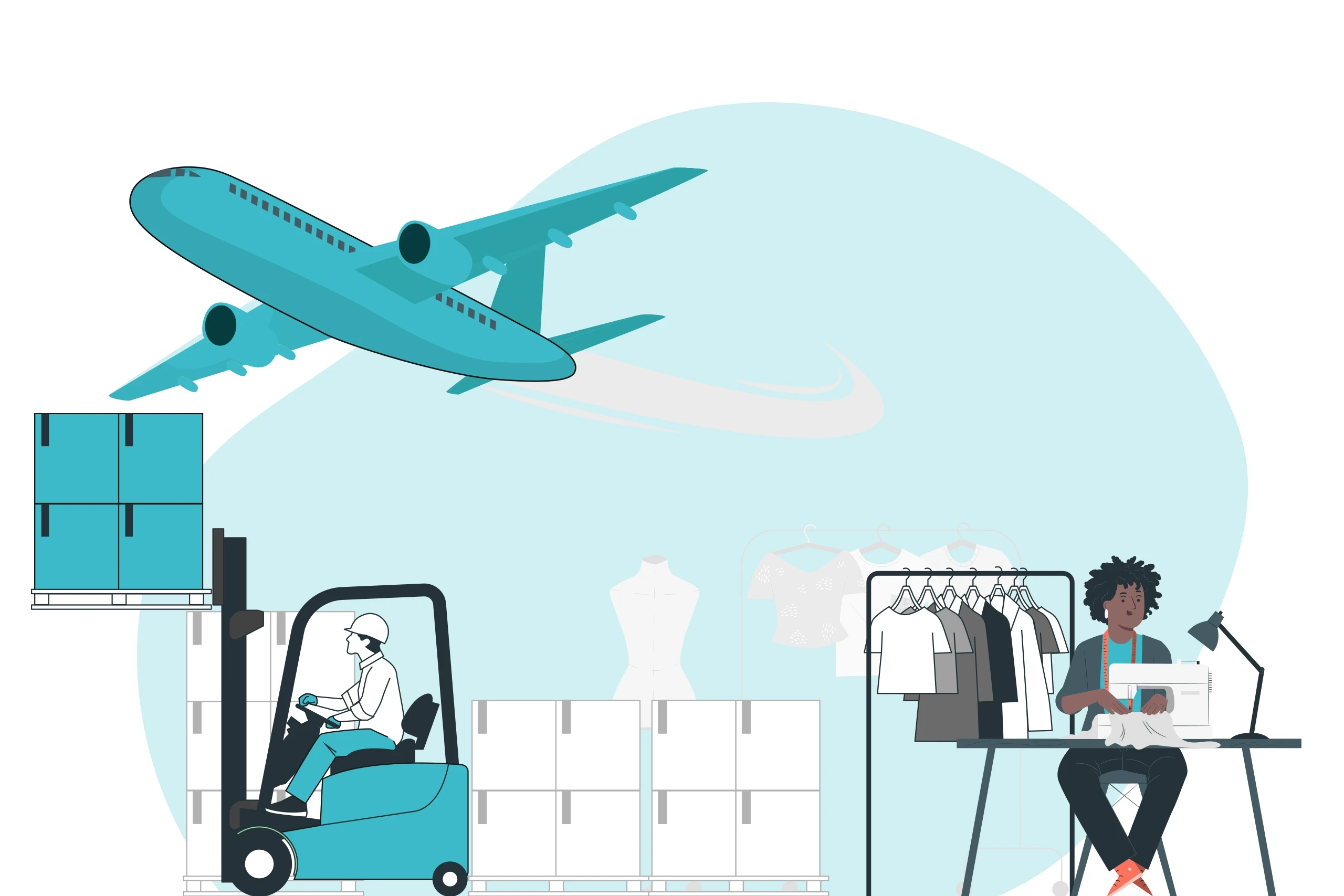

Why the Apparel Industry Needs Supply Chain Management
Uniouter possesses a stable and efficient supply chain system
Areas covered by Supply Chain Management include:Machine Operations, Human Resources, Raw Materials, Logistics, Sales Volume.
Supply Chain Management runs through the entire process of apparel production, covering every step from raw material flow to finished product delivery. Building specialized network systems is crucial for achieving efficient operations and accurate tracking.
Measures Uniouter Takes to Handle Supply Chain Emergencies

Design Issues
If there are any problems with your design, please contact our sales team immediately. The Uniouter team (including the sales team, designers, and production supervisor) will hold a meeting right away to determine a solution and adjust the production process as soon as possible.

Raw Material Issues
When raw material issues arise, Uniouter will immediately notify the material supplier and you, proposing solutions such as using alternative materials. We strengthen supply chain management to ensure the timely supply of raw materials and accessories, preventing production halts caused by shortages or delays.
Delivery Time Issues
If the delivery date is delayed, Uniouter will inform you promptly and adjust the production schedule as soon as possible to ensure on-time delivery. If you have an urgent order, please inform us of your required delivery date, and we will assess and respond with a solution within 24 hours.

Production Line Issues
Uniouter has established an agile production system capable of responding more quickly to changes in customer demand, promptly adjusting production schedules and processes. Timely maintenance ensures the stability of the production line, optimizing line efficiency or adding lines to increase output.

Staffing Issues
If staffing problems arise, we will arrange replacements promptly and can mobilize and train personnel within a short period to maintain production efficiency and quality.

Quality Issues
Upon discovering a quality issue, production is stopped immediately for investigation and improvement. Uniouter strictly controls the quality of raw materials, components, and the production process to ensure every product meets quality standards.

Logistics Issues

Cost Issues
We can reduce raw material costs through effective supplier negotiations and inventory management, ensuring the timely, accurate, and high-quality supply of raw materials, and providing you with more competitive quotations.