The Windbreaker Gets a Promotion: Specifying the Shoulder-Season Shell
- Share
- publisher
- UniOuter
- Issue Time
- Nov 9,2026
Summary
The lightest jacket in the line now sells in two markets at once - trail and commute. A development guide to windbreaker specs: weight, packability, hood construction and fluorine-free DWR.
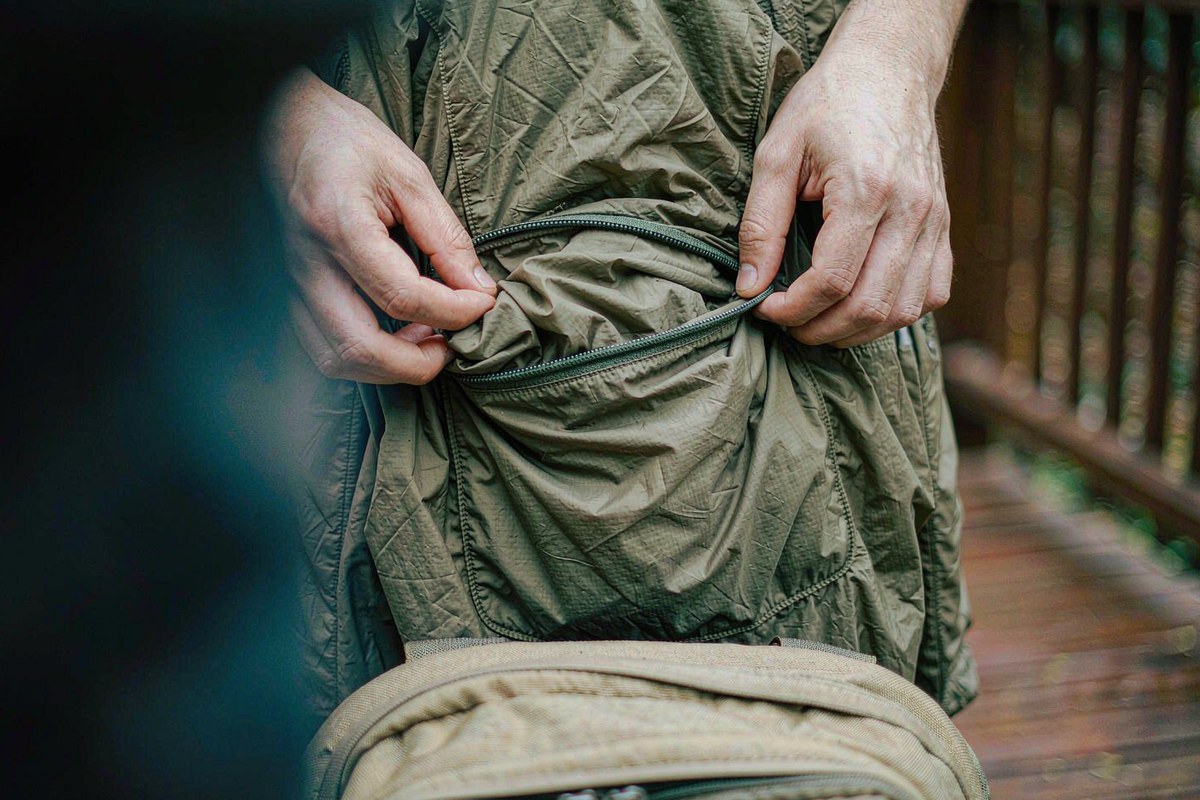
The windbreaker used to be the cheapest item in the line - a nylon afterthought stuffed near the register. Volatile shoulder seasons and the urban outdoor crossover have promoted it into the most strategically interesting jacket a program can carry: one SKU that sells to the trail customer in April and the commuter customer in October.
Two forces are lifting the windbreaker. The first is weather: as we covered in the modular layering briefing, warm volatile winters have stretched shoulder seasons into the longest, most sellable windows of the year - and wind, not rain, is what those windows actually deliver. The second is style: the urban outdoor crossover moved technical silhouettes into city wardrobes, and a windbreaker is the most natural bridge garment in the range. This briefing covers what separates a windbreaker that sells from one that sits, from the factory side.
Why the Windbreaker Wins the Shoulder Season
Spring and autumn sell wind, not weather drama. A customer in a nine-degree drizzle buys a waterproof shell; the same customer on a dry twelve-degree morning with a cold wind buys a windbreaker - and that morning describes most days of most shoulder seasons. This is the volume logic behind the layering programs covered in smaller first buys: the windbreaker is the layer that refills against observed weather fastest, because it is light to ship, inexpensive to re-cut, and never has to wait for real winter or real rain to justify itself.
| Dimension | Windbreaker | Softshell | Waterproof shell |
|---|---|---|---|
| Core job | Blocks wind, adds a light rain pause | Blocks wind, stretches, breathes | Blocks sustained rain |
| Weight class | Lightest in the line | Mid | Heaviest |
| Sellable window | Longest - most of the year | Autumn through spring | Narrower, weather-driven |
| Price entry | Line's accessible entry point | Mid tier | Premium tier |
| Packability | Packs into its own pocket | Rarely packs small | Packs into a hood or pouch |
| Refill behaviour | Fast - light, cheap, re-cuts quickly | Moderate | Slower, committed fabric buys |
The spec that sells it twice: packs into its own pocket, hangs on a city rail
The Spec List That Separates Sellers from Shelf Stock
A windbreaker has few components, which is exactly why its failures are visible. There is nowhere to hide a bad zipper on a two-layer garment. The checklist below is what we walk through with buyers before a windbreaker style is cut.
- Weight with a purpose - light enough to forget, but not so thin it telegraphs cheapness; hand-feel is the in-store closer
- Packability that works - a stuff pocket sized in the pattern stage, not an afterthought; if it does not pack, it is not a packable
- PFAS-free DWR - fluorine-free repellency is the compliance baseline for EU-bound lines since the PFHxA restriction entered force; verification guidance is in our PFAS-free buyer guide, and the chemistry databases maintained by bluesign and ChemSec are the standard references for qualifying a fluorine-free chain
- Hood that stows clean - a packable hood or collar-integrated design keeps the silhouette city-appropriate
- Wind front, breathing back - tightly woven face fabric or a light membrane in front; ventilation or mesh back where sweat actually collects
- Zippers and hardware - the two visible components on a light jacket; spec them once, share them across the layering program to hold cost down
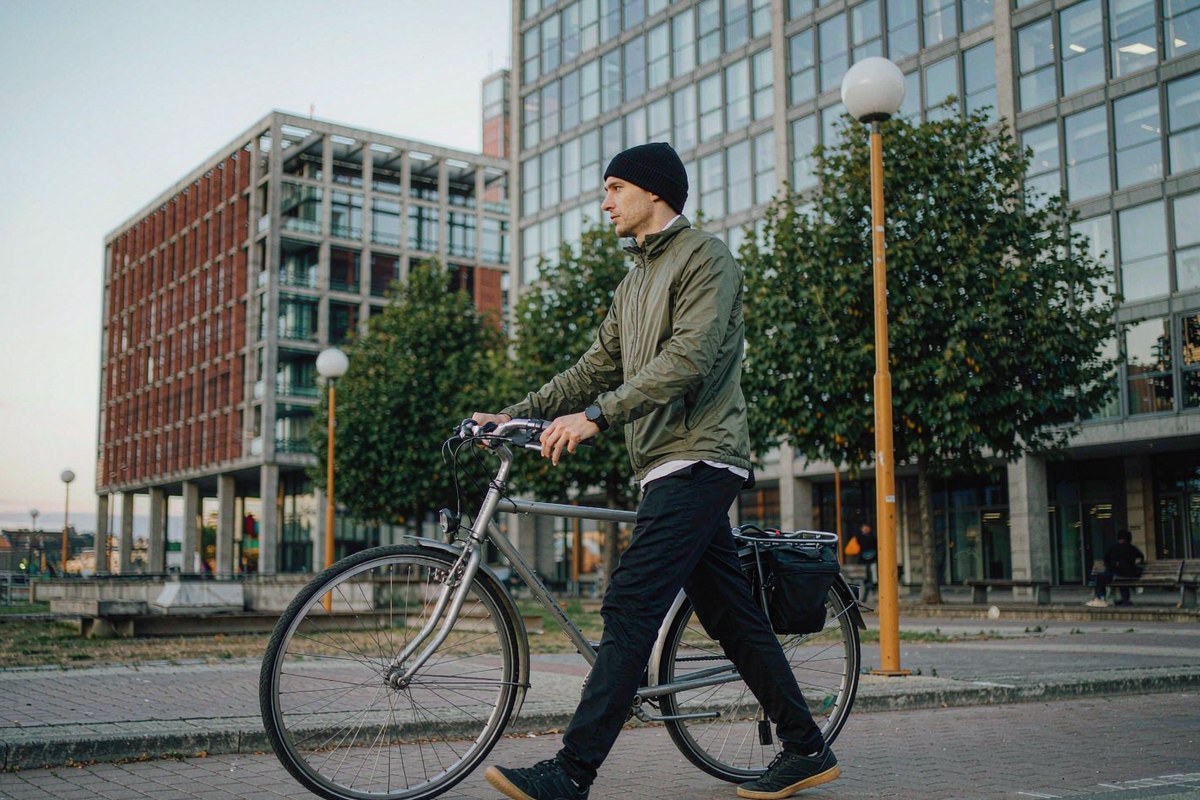
A windbreaker earns its second sale on a bike lane, not a trailhead. Riding posture stresses the shoulders, backpack straps abrade the chest panel, and stop-start city movement makes breathability matter as much as wind resistance. Programs that test samples against a commute scenario - not just a hiking one - ship a jacket that two customer groups actually want. For the styling side of the crossover, see the urban outdoor wear briefing.
A windbreaker is the cheapest way to enter the line and the fastest to leave it. The specs that keep it on the shelf cost nothing at development time.
Product line planning note, autumn 2026Building It as a Program, Not a Style
The strongest commercial pattern we see is the windbreaker as the entry rung of a layering ladder: same colorway language as the mid layer, shared zips with the shell, one fit block that scales across a women's cut without a separate pattern narrative. Our jacket line building guide covers the full ladder; the women's fit point matters more than most programs credit - a women's windbreaker forked from the men's block without re-grading is the most common reason the second colourway never sells.
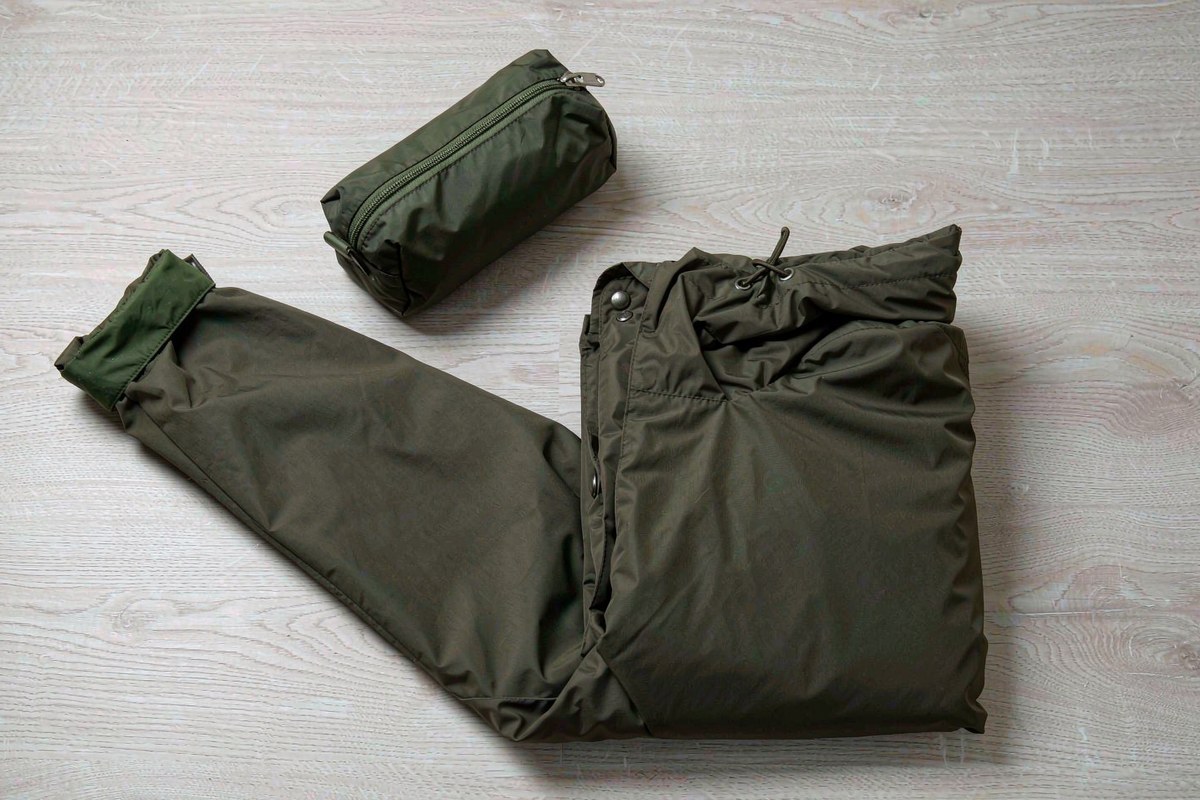 One program, one fold: the packable spec keeps the story simple at retail
Where UniOuter Fits In
UniOuter develops windbreakers and packable shells alongside the layering program they belong to: tightly woven face fabrics, fluorine-free DWR chains, stowable hoods, stuff pockets patterned in from the start, and 300-to-500-piece starting runs with shared trims across the ladder. For a program view, the Quiet Technical briefing explains why quiet, versatile shells now carry growth, and the softshell versus hardshell comparison frames where the windbreaker sits between them.
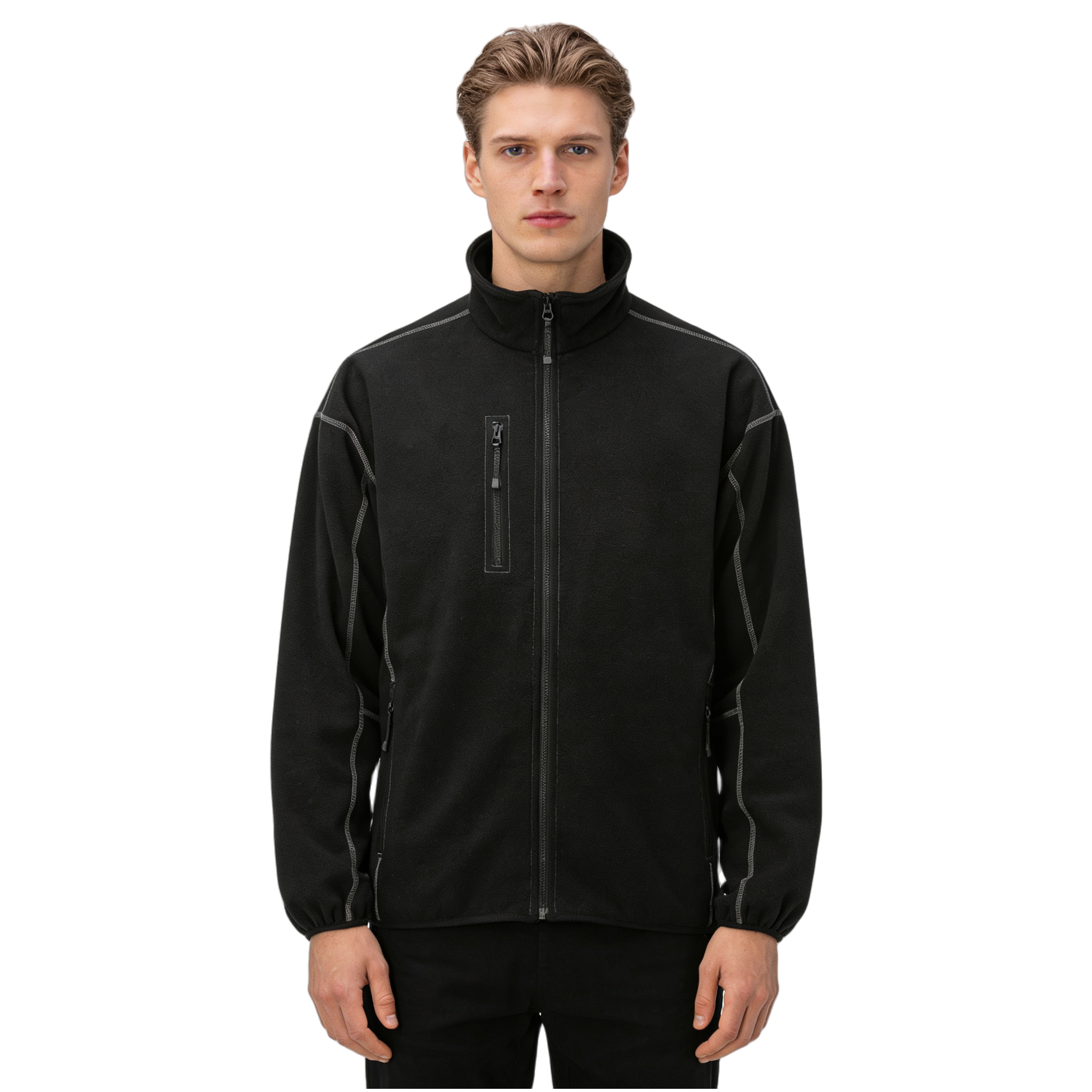

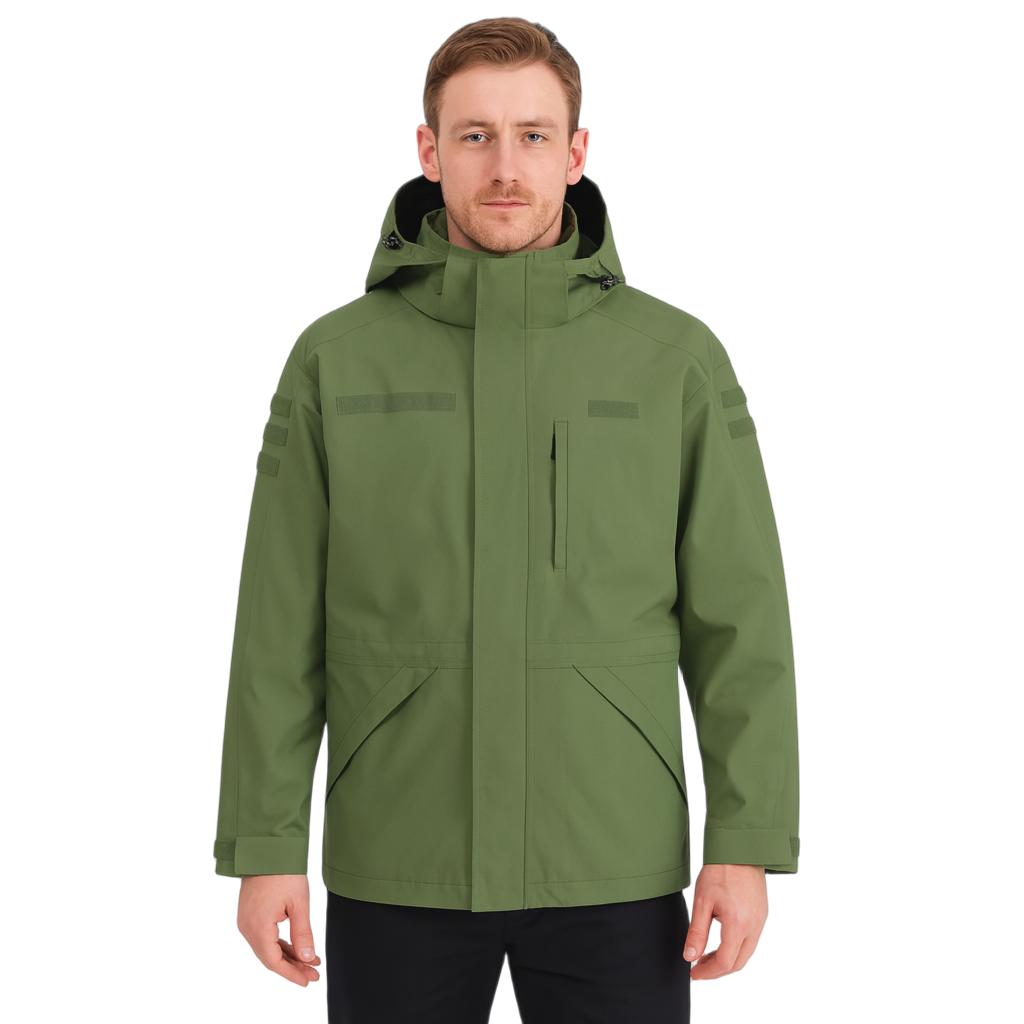
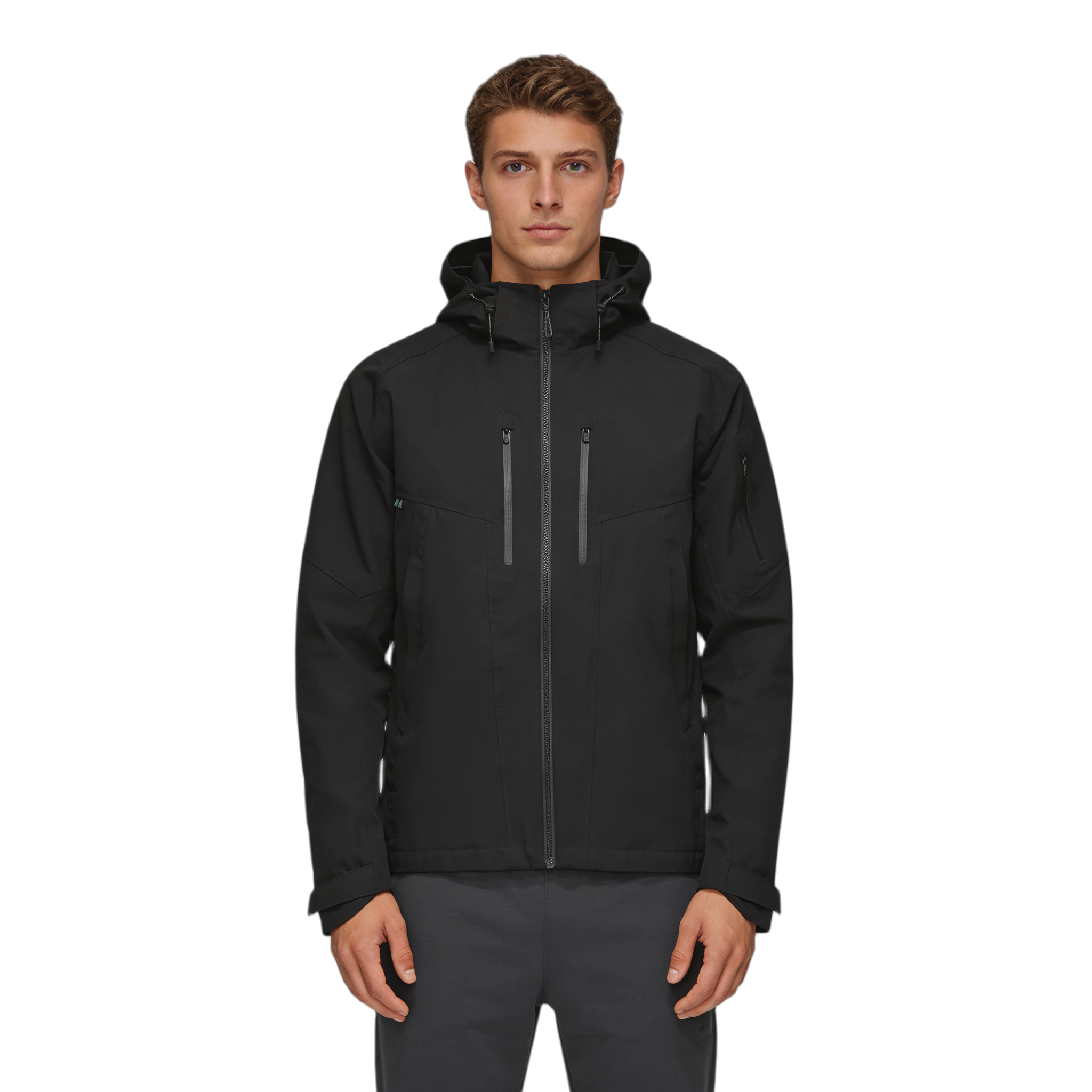
A windbreaker is a lightweight jacket built primarily to block wind, usually with a tightly woven face fabric and a light DWR finish that handles a brief shower. A rain jacket is built around a waterproof-breathable membrane with taped seams and a storm flap. A windbreaker is lighter, packs smaller, breathes better and costs less; it is not a substitute for sustained rain.
Most programs aim for a jacket light enough to be forgotten in a daypack but substantial enough to feel like real clothing in hand. The exact number is a brand decision - what matters more is that the weight is achieved with woven density and hardware choice rather than by thinning the fabric until the hand-feel turns customers away.
For EU-bound programs, fluorine-free DWR is effectively the baseline now that the PFHxA restriction is in force and brand disclosures are under the Empowering Consumers Directive. Fluorine-free repellency behaves differently - it wets out faster under sustained rain but recovers after washing - so verification and wash-durability testing matter more than the label.
Yes, and it is the strongest commercial argument for the category. The construction that blocks wind on a ridge also blocks wind on a bike lane; the differences that matter - shoulder articulation for riding posture, abrasion resistance under backpack straps, stowable hood for city silhouettes - are pattern-stage decisions that cost little when specified up front.
With a low-MOQ factory, a windbreaker style typically starts around 300 to 500 pieces per colourway. Because the garment has few components, sharing zippers and trims with the rest of a layering program keeps development cost low and makes refills fast.
As the entry rung of a layering ladder: windbreaker for dry cold and shoulder seasons, softshell for stretch and active use, waterproof shell for rain and winter. Sharing colorway language, zips and fit blocks across the three lets customers enter at any tier and climb without the line feeling like three different brands.
Building a shoulder-season program? Send us your weight target and climate window and we will map the windbreaker and layering ladder around it.
Start the program