Why the Same Green Looks Different in Every Shipment: Colour Management in Outdoor Apparel Production
- Share
- publisher
- UniOuter
- Issue Time
- Nov 6,2026
Summary
Shade variation is the quietest way a good season goes wrong. A factory-side guide to lab dips, light boxes, metamerism and the approval chain that keeps one green looking like one green.
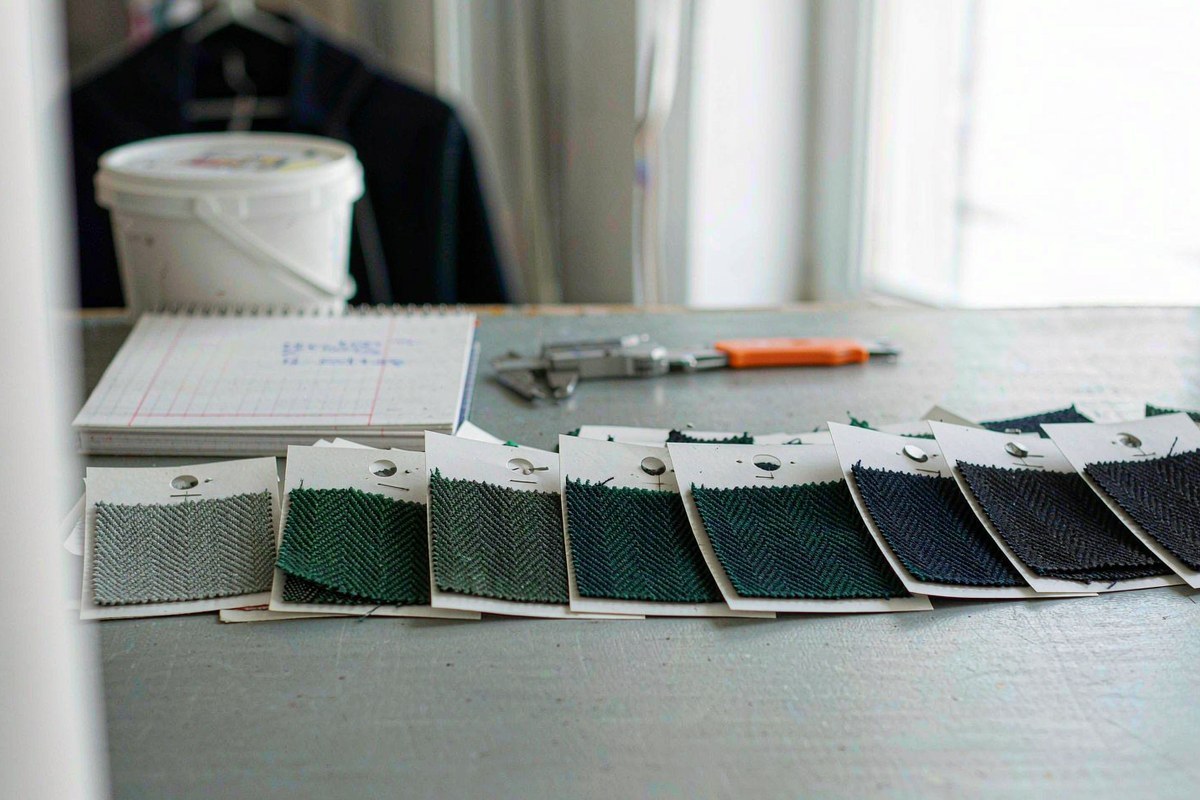
The most common colour complaint in apparel does not arrive as a complaint at all - it arrives as a reorder that does not match the first order. Shade drift is quiet, expensive and almost always traceable to a skipped step in the approval chain. This briefing walks that chain from the factory side.
A brand signs off a beautiful lab dip in September. The January refill ships, hangs next to the first delivery on the same rail, and the greens are visibly different. Nobody broke a rule; the standard was simply never carried forward. Colour is the one product attribute that is decided in five places - dye house, fabric mill, finishing, warehouse lighting and the buyer's office - and controlled in none of them by accident. The fix is procedural, not technical, and it starts with knowing where shade actually drifts.
Where Shade Actually Drifts
Colour drift is not one problem; it is five different ones wearing the same symptom. The table below maps the failure modes we see most in technical outdoor fabrics, where deep saturated greens and navies - the category's core palette - are also the hardest shades to hold. The fabric selection guide explains why base cloth matters to every other spec; it matters just as much to shade.
| Failure mode | What the buyer sees | Where it comes from |
|---|---|---|
| Dye-lot drift | January refill slightly yellower than October delivery | Different dye batch strength or dye-house water temperature between production windows |
| Metamerism | Matches in daylight, splits under store lighting | Dyes with different spectral reflectance; the pair only agree under one light source |
| Base-cloth shift | Same recipe reads differently on two fabric bases | Fabric base variation: cotton and nylon take the same recipe to visibly different depths |
| Recycled feedstock variation | Recycled-shell lots wander shade over a season | Feedstock sources change; the recycled fabrics guide covers the wider certification picture |
| Finish shift | DWR-coated panels read cooler than uncoated trims | Coating and lamination layers bend perceived shade; trim and body approved separately |
Lab dips: the same recipe walked toward the standard in controlled steps
The Approval Chain That Holds Colour
Holding one green across a season is a relay, and the baton is a physical standard. Each stage hands the approved swatch to the next stage; whoever loses the swatch loses the colour. The four steps below are the minimum chain for technical outerwear, where laminates, coatings and taped seams all sit between the dyed fabric and the jacket the customer sees.
Colour does not fail at the dye house. It fails at the handover - when one stage approves and the next stage never sees the standard.
Production floor note, dyeing and finishingWhat to Put in the Tech Pack
Most shade disputes we see trace back to a tech pack that named a colour without defining how it would be judged. The checklist below is what a colour-tight tech pack carries, and none of it is expensive to specify up front. The durability briefing makes the same point for physical specs: what is not written down is not a requirement.
- A physical swatch, not just a Pantone number - paper standards float; dyed cloth on the correct base does not
- Named light sources - list D65 plus the store lighting your retail actually uses, so approval mirrors the shelf
- A numeric tolerance - Delta E threshold plus grey-scale minimum (4 or better) turns 'looks fine' into a checkable rule
- Trim and body approved together - zips, webbing and binding approved under the same box, on the same day
- Batch discipline - agree dye-lot sizes up front so refills are compared, not assumed to match
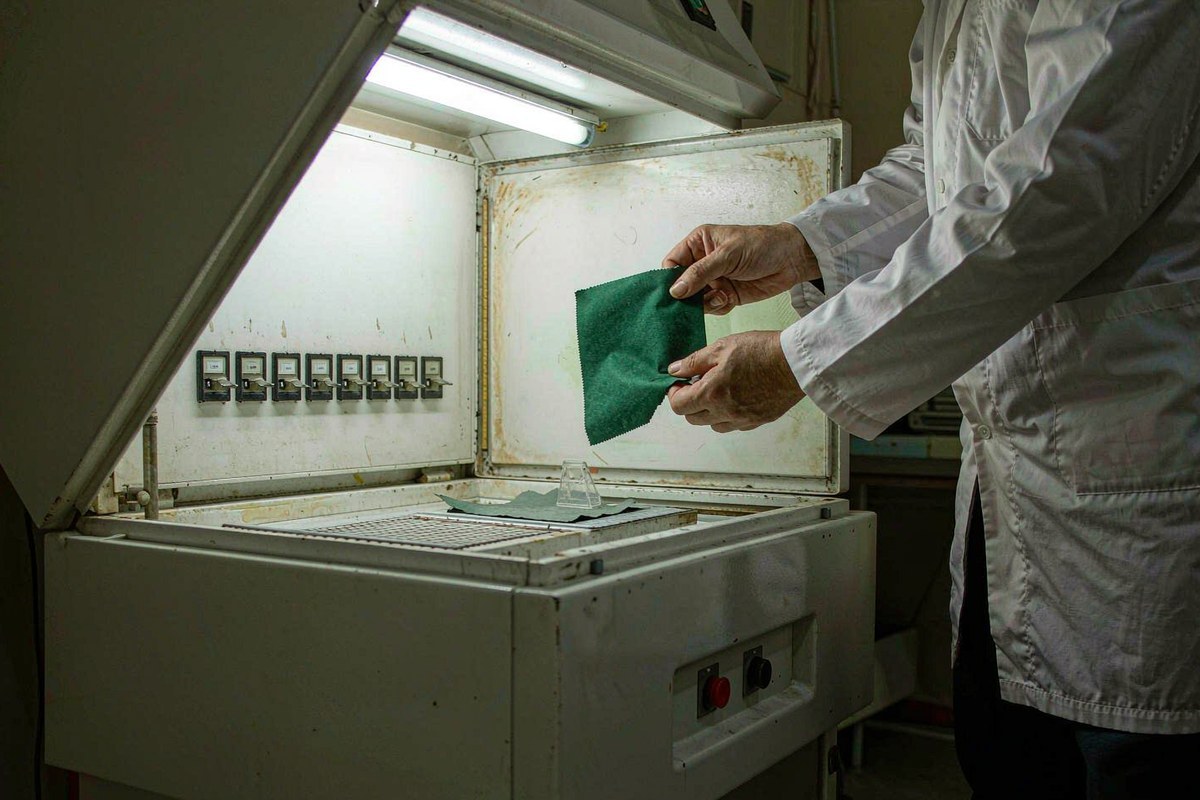
And the most skipped. A technician who checks bulk fabric against the standard under D65, store fluorescent and warm light in ninety seconds catches metamerism before it becomes a container. Buyers who visit factories should ask to see the light box session - a plant that runs colour seriously will show it without being asked.
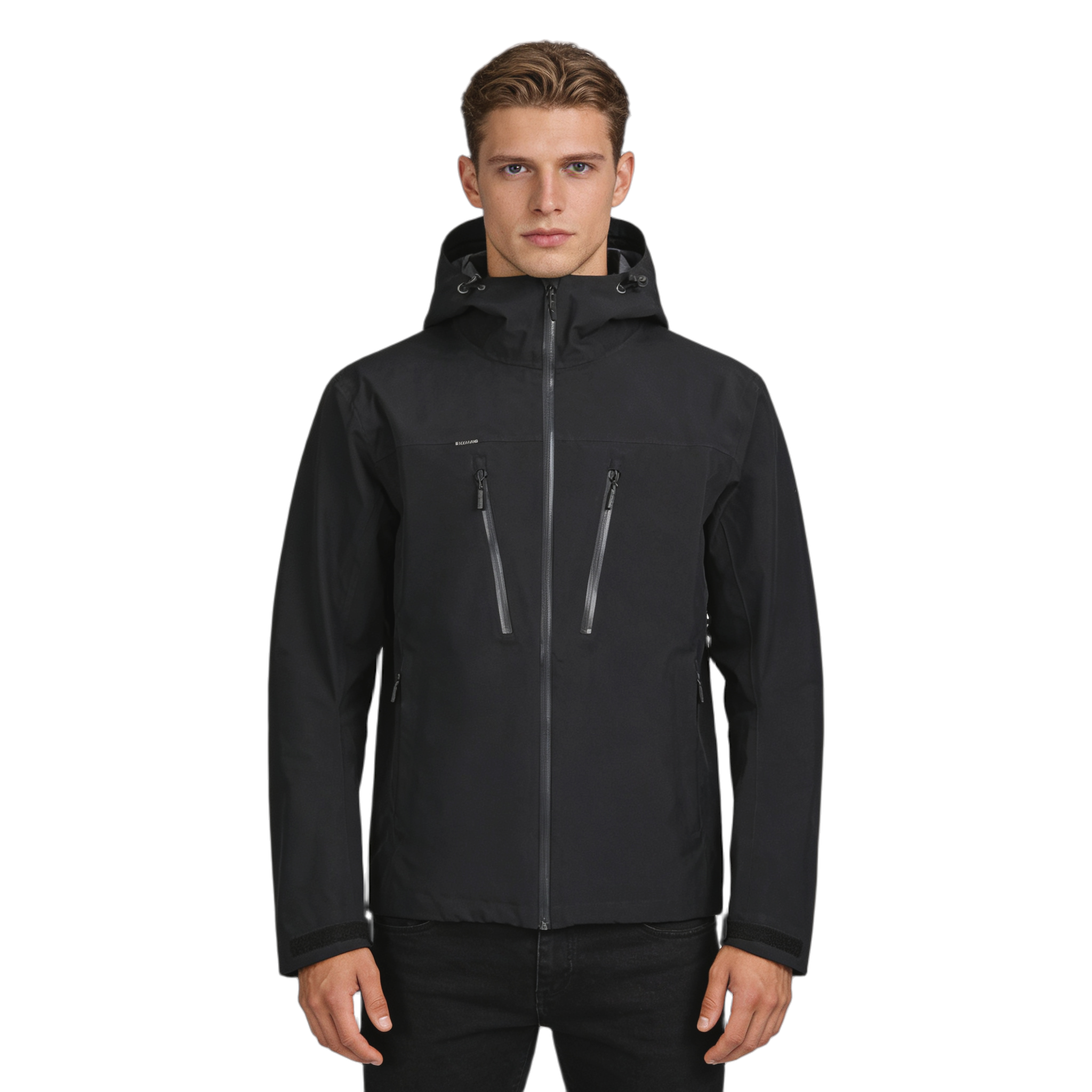
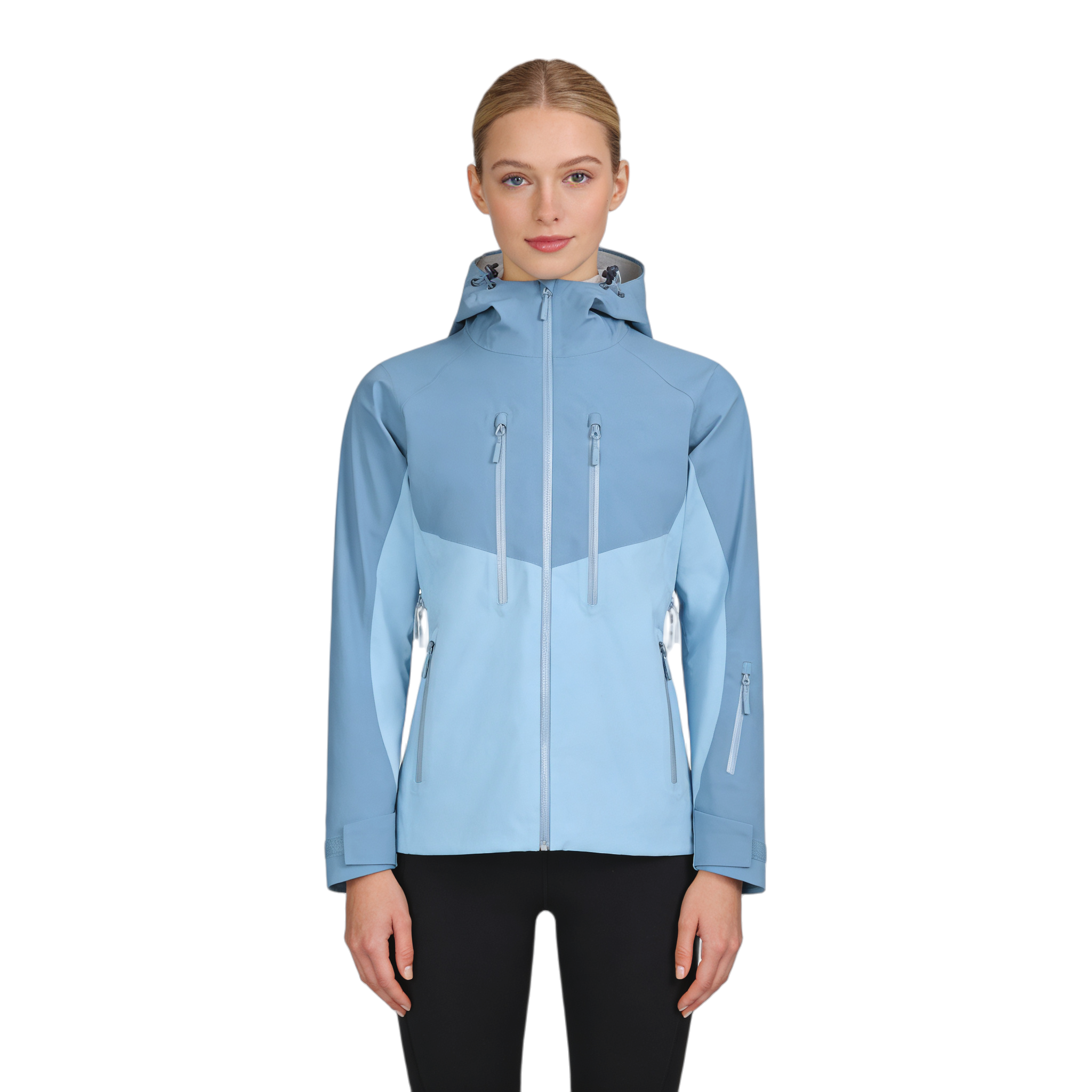
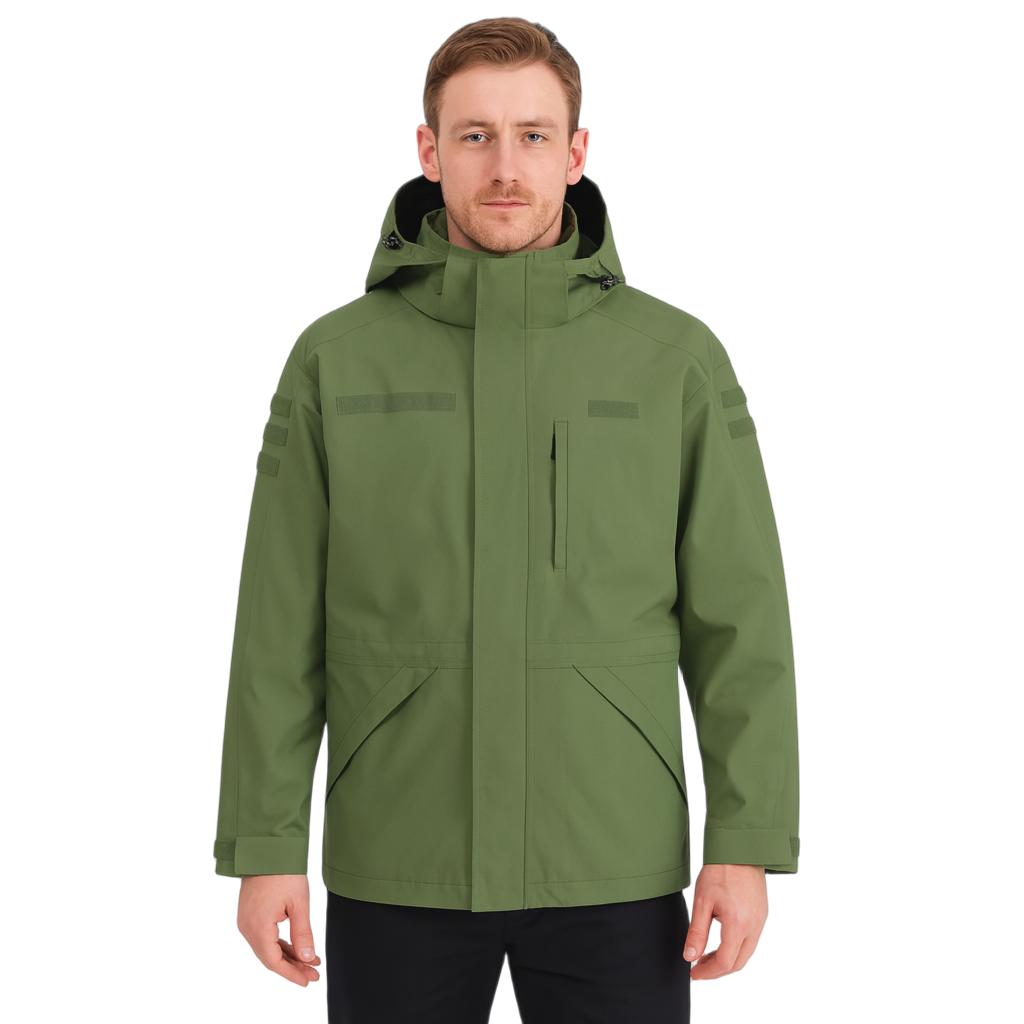
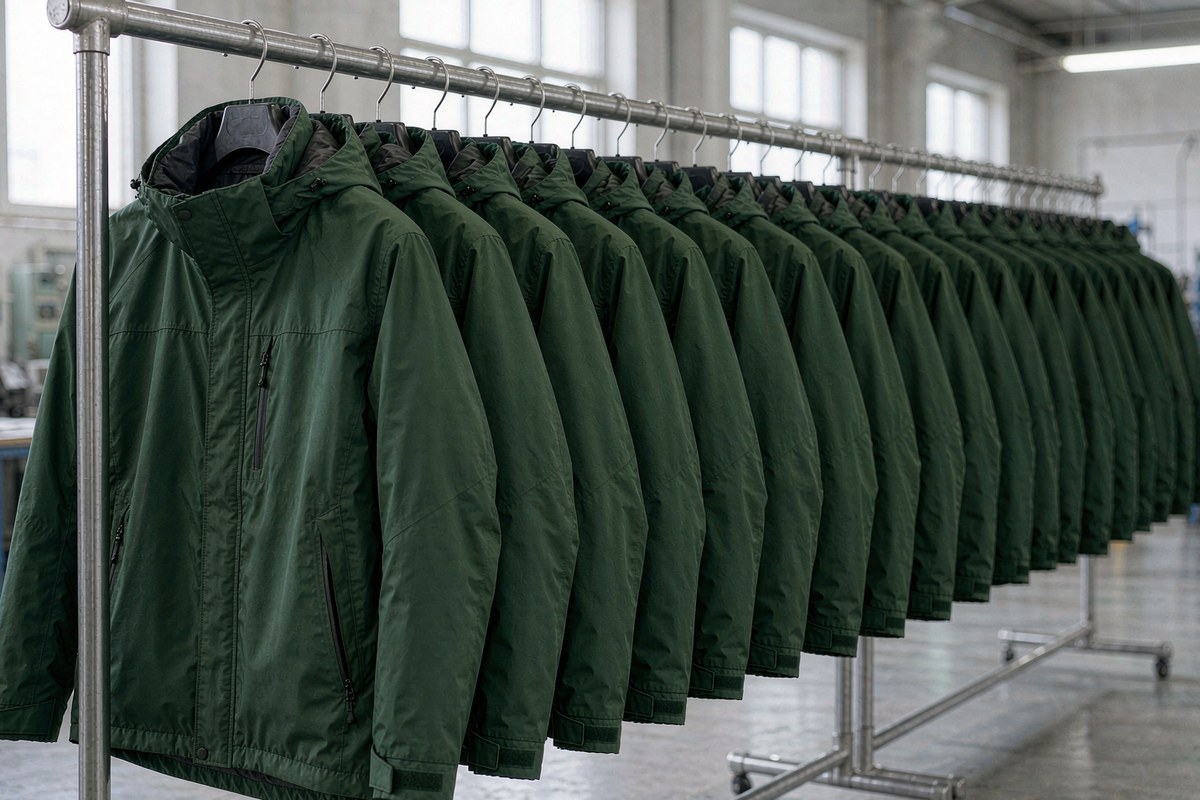 What the discipline looks like shipped: one shade, every jacket, one rack
Where UniOuter Fits In
UniOuter runs the full chain in-house: lab dips on the production substrate, a calibrated light box for every approval, in-line shade sorting at the cutting table, and Delta E records kept with the batch file. Deep greens and navies - the shades this category lives in - are held across dye lots so a November refill hangs next to September's delivery as one product line. This discipline is what makes tonal, colour-led programmes possible at all; our Quiet Technical briefing covers why quiet palettes now carry the growth segment, and the European market briefing shows how European buyers weight colour consistency. For general colour science references, the Society of Dyers and Colourists and the Colour Index International are the standard bodies behind the terminology used here.
A lab dip is a small lab-dyed swatch of your chosen colour on the intended fabric, submitted for approval before bulk dyeing. It matters because it is the cheapest point to catch a wrong shade - after bulk dyeing, correcting colour means re-dyeing or replacing fabric at full production cost.
Metamerism is when two fabrics appear to match under one light source but split under another, because their dyes reflect light differently across the spectrum. It is why a colour that matched in the office can look wrong under store lighting - and why approvals must be checked under multiple named light sources.
Many brands work with a CIELAB Delta E of about 1.0 or lower between the approved standard and bulk production swatch, with tighter tolerances for critical shades. The exact number is contractual - the important part is that a numeric threshold is written into the tech pack so both sides measure the same way.
Recycled feedstock varies by source and batch, which shifts how dyes take to the base cloth. Skilled mills manage this with tighter feedstock sorting and adjusted recipes per lot, but buyers should expect slightly wider shade tolerance on recycled programmes and insist on lot-by-lot comparison against the standard.
The grey scale is a 1-to-5 visual rating that compares a production swatch against the approved standard - 5 means no visible difference. A minimum rating of 4 is a common acceptance rule for bulk colour matching in B2B apparel contracts.
It depends on what the approval chain documented. When the tech pack specifies the standard, light sources and tolerances and the shipment deviates from them, the correction sits with the supplier. When colour was approved verbally without a physical standard, responsibility becomes a negotiation - which is exactly why the written chain exists.
Specifying a tonal programme or matching an existing line? Send us your standard swatch and we will walk the full colour chain from lab dip to shipment.
Start a colour programme